The Grey Area of 50 Shades of Grey

By Issy McConville

ANASTASIA STEELE FIFTY SHAD 720x1080 The Grey Area of 50 Shades of Grey

So, the day before Valentine’s Day I did what a lot of people have done recently, I went to go and see ’50 Shades of Grey’. Due to some confusion with the Dutch cinema website I almost booked to go and watch it the day before my friends, which would have been a disaster because I needed emotional support to get through what I can only describe as a TERRIBLE film. It’s a film with little to no plot, with the one and only selling point being its ‘sexy’ reputation, the two leads have absolutely no chemistry. I’ve seen better acting in school productions (I once played Wolf Two in ‘The Lion, the Witch and the Wardrobe’at school, so I think I’m a pretty good authority on this issue). Also - where is all the sex? Dakota Johnson does get her boobs out a bit, but Jamie Dornan spends the whole time in jeans - presumably his special ‘sex jeans’due to their risque ripped nature (also ripped jeans are v trendy, good work Jamie). I saw a bit of wrist tying, a selection of blindfolds and that was about it. I think I would have been more excited if I’d spent that two and a half hours staring at the wall in my room in complete silence. Judging from the extreme fits of giggles erupting all over the full cinema, everyone else thought it was a bit of a joke too. My personal worst moment of the film - Anastasia is lying in bed, recovering from a heavy night on the drink, eating some toast that Christian has just ordered her to eat; when he slides up her and says something like ‘if you were mine, you wouldn’t be able to sit down for a week’and takes a munch of her toast. I could only laugh. When did toast become sexy?

However - my issue with this film goes a bit deeper than my distaste for the weak script and casting choices. As one of my friends said after seeing it - this film made us feel uncomfortable. I know the premise of the story is that Mr Grey is an unreadable and cold character versus the innocent virginal Anastasia. But some of his actions are genuinely concerning. He literally stalks her across various states, and says weird controlling things like ‘ANOTHER COSMOPOLITAN??’- at this particular point, Anastasia is with her mum, and has had 2 cocktails, not exactly bordering on a life-threatening situation. He clearly things Anastasia is incapable of making her own life decisions, and that she should only do things exactly the way he would like them, for instance part of the ‘sex contract’involves Grey controlling what Anastasia eats, and engaging in any sexual activity he might feel like at any time. Also, Grey is really not that bothered by what Anastasia wants. She wants to do things like going to the cinema and have a little post-sex cuddle, but instead he encourages her to gain her pleasure by pleasing him and doing exactly what he wants. If a man did this in real life, I would be genuinely concerned.

There is some sense that Anastasia might be a powerful female character, as the only girl who has ever had power over Christian Grey. She says things like - actually no I’ll go home instead of having sex with you on this table right now, and he’s all mad and we see sexy shots of him gripping the table in lust. The film ends with her leaving his house after he has beaten her with a stick until she’s crying. I don’t know much about the BDSM community, but I think that leaving your partner crying and terrified is probably not what its all about. This is not an equal relationship in any way. And Anastasia is not a feminist character. This is not what every relationship should be like, every girl should be able to say no, and be an equal sexual and emotional partner to a man. Also, fundamentally - why does Anastasia even like Grey? He’s got no personality as far as I can see, he’s just a powerful rich man who takes her on rides in private helicopters and buys her expensive presents like a car. This literally couldn’t be a more stereotypical relationship, between the idealised virginal girl and the powerful, dominating man.

In conclusion - this film is offensive - to my eyes, to the medium of cinema, and to ideas of gender relations. 0/10 would not recommend.

My Issues with Red Carpet Feminism

PBG blog pic My Issues with Red Carpet Feminism
By Gemma Garner
Trigger Warning
Just a pre-warning: this is is going to sound ungrateful, and even petty to some. I know that we all universally adore the likes of Tina Fey, Emma Watson and Lena Dunham. Honestly? We can’t really help it. They’re everywhere, always sporting their ‘world’s favourite feminist’ and ‘funny-and-approachable’ badges. Emma Watson? Yeah, she’s a COOL feminist. She works alongside men, unlike the rest of them. Tina Fey? Man, that chick is FUNNY. Lena Dunham? God, she’s so quirky. Remember that one time she molested her little sister and wrote about it in her book? Then expected everybody to forgive her? Because she’s a ‘good’ feminist? Pretty funny.
Now if I sound bitter, it’s because I am. Don’t get me wrong; these women are beyond incredible and strong for standing up and reclaiming feminism in a male dominated industry. It just seems they’ve only reclaimed it for women like them. Most of the time, it can feel like they’ve all been raised to believe there are only 3 kinds of people in the world. White cis women, straight men, and white gay men.
What makes it worse, is it seems they all have to support each other. No. Matter. What. Even sideline ‘i-dont-shout-about-it’ feminists like Taylor Swift have to support them. When Tay-Tay (who is wonderful, by the way, it’s a shame she actively supports problematic people) became a feminist, I was SO tired of seeing the headlines. It was like, BREAKING NEWS, TAYLOR SWIFT HAS COME FORWARD TO SAY; ‘I LIKE FEMINISM NOW, I GUESS I’M A FEMINIST! I COULD HAVE SWORN IT WAS ABOUT BRA BURNING MAN HATERS BECAUSE OF ALL THOSE OTHER, UNFUNNY, DULL FEMINISTS, BUT THANKS TO LENA DUNHAM, I SEE THAT IT’S NOT. YAY WHITE FEMINISM’. It’s like there’s this huge, underground, glamorous, red carpet feminism alliance, where every member has to agree to laugh at each others’ jokes and ignore any kind of problematic behaviour. And at the end of the day, it’s ok, because they’re all BEST FRIENDS! How great is that? Girls… girls that are friends!!!
All I’m asking is that, when we see praise for these opinions, we take it with a pinch of salt. Before you repost that quote about feminism from Tina Fey, ready to type ‘she is the QUEEN!’, remember that glorifying some of their examples of feminism can actually be pretty problematic. Their feminism can be, and is, sometimes flawed. We forget that these women have had to adjust their feminism in a way that makes it accessible to a mainstream audience; this feminism has been primped in a way that often excludes trans women and women of colour, and in some cases, makes it about men. We’re being spoon fed watered down feminism in a way that makes us forget that people are only listening to these women because the media has deemed them funny or beautiful enough to be listened to. We need to bear this in mind and remember; these women have to keep their feminism looking just as beautiful as those on the red carpet.

I won’t be Jumping on the Brand-Wagon

By Cora Morris

pg 6 brand 4 teri I wont be Jumping on the Brand Wagon

“It is an incredible time to be alive.”:

A phrase that seems to flash across my brain all the more frequently at the moment, in quiet moments of humbled acknowledgement. Indeed I see it elsewhere too. It’s chucked around incessantly at rocket launch after rocket launch, called out when another medical breakthrough hits the headlines. With each and every flashy new gadget, we are reminded of the wonders of human achievement, and it is brilliant. I am as glad of these things as the next person, they delight me. But, in all truthfulness?

I’m a social justice girl.

I like anger. I like protest, peaceful or not. Uprising excites me like little else. Anyone with an ounce of awareness of the world around them likely recognises that we are living in a time where that’s becoming increasingly prevalent, with fury brewing. It’s the same brew of fury that’s been bubbling away for years, decades, centuries, but now feels climactic. It’s felt as if the gradual accumulation of gross injustice, and the resultant rage felt, has mounted, and is about to blow. It feels as if we are on the cusp of a global revolution.

We have been craving this.

It is so exciting.

The work done by activists and campaigners to get to this stage has been tireless, and all too often painstaking. The fact that it might just be paying off is delightful. Which justifies a feeling of irritation – to say the least – when an already very privileged, and essentially un-oppressed figure of society not only semi-discredits this work, but begins to profiteer from it. A Che Guevara-esque character seems to be Russell Brand’s latest dress-up costume in the comedian-turned-actor-turned-author-turned-revolutionary’s never-ending wardrobe of personas. This said, something tells me that the Cuban Marxist’s intentions were somewhat different.

Had Brand’s past actions not been so questionable, I’m sure I’d be more tolerant of his ‘activism’. Indeed when his more political side began to emerge a year or two ago, I was almost willing to give the man famed for prank-calling a rape helpline a second chance. His misogyny littered everything he did, scandalous text messages and ‘casually sexist’ stand-up routines included and certainly not to be forgotten. The thing is, the man is clever enough to know that in order to get anywhere in the long-run with his anti-capitalist, anti-authoritarian, anti- establishment revolution, he is in dire need of re-working his public image regarding his attitudes toward women. Besides, if he’s advocating an entire overhaul of ‘the system’ as we know it, in all its gross hierarchal glory, one would hope that that would include the patriarchy. He also knows that within the extreme left groups that similarly back this kind of uprising, there are countless feminist overlaps, and beyond that, that feminism is incredibly topical at present.

Early last year, Brand tweeted a photo of himself holding up a No More Page 3 t-shirt in support of the campaign, receiving a very mixed response. Though not entirely significant, you’d think he might bother putting it on! In the accompanying caption, he wrote how “Finally, through love of a good woman, sexist me was slain.”.

I’d love to believe it, Russ - really, I would. But that tweet in itself isn’t quite the compelling evidence I was hoping for. Superficial compliments aren’t quite the way forward, I’m afraid, and your words reek of benevolent sexism.

Eleven months on, and Brand’s presence in the public eye as a messianic figure for the left had grown considerably. In mid-December, his much anticipated appearance on the BBC’s Question Time took over our TV screens and Twitter feeds for an evening. Expected, essentially, to be a Brand vs Farage brawl, the show was watched by millions of popcorn-clutching Britons. It was an episode of Jeremy Kyle, albeit a little more political and arguably less civilised.

During the show, Brand clashed with more or less everyone on the panel. What struck me as obvious in him over the hour-long programme was a kind of obligatory awareness of feminism, much like his No More Page 3 tweet. As communities minister Penny Mordaunt praised firefighters, he interrupted, saying: “Pay their pensions then, love.” Then, with a little hesitation: “’Scuse the sexist language, I’m working on it.” He acknowledged his fault, yes, and that is a step in the right direction. But to come out with such a comment in the first place was a fatal error, and one I’m sure few will be forgetting in a hurry.

I suppose what I struggle with most about this Brand-wagon that so many are jumping on are the petty feelings of creditability, of originality, and the wholly more offensive profit side of things. Admittedly most realise that no, Russell isn’t the first to proclaim that “Shit is fucked up, and stuff”, but there seems to be a certain fascination with a narcissistic comedian saying not-totally-idiotic things about politics. This in itself is worrying to me: it proves once more that with money, and with fame, comes an automatic elevation when it comes to voicing an opinion. This only serves to hush so many with similar ideas from people who work oh-so-much harder to get their voices heard. From someone who is supposedly fighting against this grotesque kind of privilege, this feels a little hypocritical. Of course, by making money in the process, many feel even more aggravated by him.

Revolution’: from the reviews I’ve read, Brand’s forth title is essentially a regurgitated mass of (perfectly good) work from elsewhere. It’s one more book for the list of many published last year calling for change, outlining the problems we’re facing as a society and printing all of the statistics to back them up. At The Guardian, Nick Cohen wrote: “His writing is atrocious: long-winded, confused and smug; filled with references to books Brand has half read and thinkers he has half understood.” Harsh though this sounds, what is true is that everything Brand says has been said before - by people far more worthy of the attention, and – dare I say it – the profits. Owen Jones springs to mind. ‘The Establishment – And How They Get Away With It’ was published a month and a half prior to Brand’s book, serving as a real and intelligent analysis of Britain’s failing government and the corrupted, privileged politicians running it. The observations made were necessary, with angering truths, and – quite obviously – the result of extensive study and research. Statistics aren’t available for sales of ‘The Establishment’, but with Brand’s attempt at a Noam Chomsky volume making £230,000 in just its first week combined with the relative bulk of publicity it was given points to it being rather more successful that Jones’ second book. And of course it would be! Russell Brand is something of a national treasure in the UK, worth an estimated £15 million and with the power to have as much media presence as he wishes. If it wasn’t already grossly obvious, this is a lot of the problem I (and increasingly others) have with him.

So, Russ, I have some ideas on what you could do to sort this out. Take them or leave them, but I think they’d do you – and your public image- a lot of good in the long run.

  1. Take a step back.

Support this revolution, but stop trying to lead it. Help to sustain it, but don’t try to be its pioneer man. Put your excessive riches to good use: pump in into the organisations and campaigns that need it, be them Class War, Occupy, The Green Party or even the smaller left-wing radical parties aiming to gain some political presence. It would make up for the money you’ve gained from all of this.


  1. Re- think your political stance

Telling our young people that the way to be heard is not to vote at all is almost criminal. It makes it far more likely that a right-wing Etonian member of the Establishment will be elected (obviously naming no names), because the voiced opinions will be those of the people that didn’t listen to you in the first place. These are exactly the people who you were trying to work against initially, and by ordering us away from the ballot boxes you do them a grand service.

  1. Fix your feminism

Get a better grip on what you really need to know, rather than a vague idea of the aims of a couple of campaigns. You will be more knowledgeable for it, and be a far better male role model for young feminists everywhere. Be critical of lots, and open up the injustices we see to a wider audience that is largely blind. We will respect you far more for that than a token tweet of support a couple of times a year.

  1. Acknowledge

There’s one more thing to get past: you are a wealthy, white, straight, cisgender, healthy man. Nothing is pushing you down. That’s not a criticism, but I don’t reckon you’d be willing to sacrifice many of those things for the sake of the revolution. So understand that you are on the receiving end of so much privilege, and that this war you are trying to fight is so much less for you than it is for others. You are a beneficiary of everything a capitalist society has to offer. Use it, but in a way that doesn’t by default hurt the movement and help your pocket.

50 Shades of Abuse

By Jess Hayden

Trigger Warning

Before I start on why exactly it is that Fifty Shades of Grey is a sexualisation of an abusive relationship, I need to clarify something: I shouldn’t have to. The examples of abuse are abundantly clear, and I am continually dismayed by the sheer amount of people who see the trilogy, or the film, as sexy. I also find it offensive that the film was premiered on Valentine’s Day. This film has nothing to do with love, or healthy sex. It’s about a manipulative control freak who stalks a woman, then makes her sign a contract which gives him complete control over her life. I genuinely fear for the people who have missed all these signs, because it demonstrates how easy it is to miss obvious signs of an abusive relationship.

The story begins with Christian stalking Ana, travelling three hours from where he lives, to see her at work. He admits to having stalked her to find out where she works (sorry for the spoiler, it’s in the second book), then asks her out. When on their first date, Christian informs Ana that she can only call him “Mr. Grey” or “Sir” whereas he can call her “Ana”. Alarm bells should be ringing. Firstly, that’s an incredibly creepy thing to do on a first date, and secondly, he’s clearly trying to intimidate her and ensure he holds power over their relationship. He proceeds to tell her Ana that she “should find him intimidating”. This guy is not sexy, he’s creepy.

Sometime after this first date, Ana is out celebrating finishing college with her friends, something she is completely entitled to do. She pocket dials Christian by accident, and in classic Christian Grey style, he demands to know where she is and what she is doing. This is alarming, bearing in mind they had only been on one date at this point. Illegally, he traces her phone calls to find out where she is and goes to collect her. This is not romantic. She specifically told him not to, and hung up the phone because he was pestering her. Instead of taking her back to somewhere she would feel safe such as her house or a friend’s house, he takes her back to his hotel room, after she’s only met him twice. This relationship is not necessarily abusive yet, but the controlling behaviour of Christian forebodes the control he will force Ana later in the story.

The next morning, she awakes confused and asks if they slept together, having no recollection of how she got there. Christian tells her they didn’t sleep together, but also says “If you were mine, you wouldn’t have been able to sit down for weeks after the stunt you pulled last night”. By “stunt”Christian is referring to Ana going out with her friends and celebrating her success. I for one did not realise that drunken pocket dialling people was illegal or deserved punishment. What is illegal though is tracing someone’s calls and stalking them. It should also be clarified that at this point in the book, no mention of BDSM has been made, so this dialogue cannot be interpreted as anything but an open threat. By now, alarm bells should definitely be ringing.

Christian demands an unhealthy level of control over Ana. In chapter 10, Ana’s friend Jose calls, which Christian interprets as Ana cheating on him, telling her he “doesn’t like to share”. She’s not a possession, nor does she belong to anyone. Ana just so happened to be talking to a human who just so happened to have a penis. No person in a healthy relationship should demand that control. It’s all downhill from here.

Subsequently, Christian asks Ana to sign a contract to “stop all this”. When Ana asks what Christians means to stop by this contract, he replies “you defying me”. Forget his money or his looks for a moment and see what is actually happening here: A man is asking a woman to sign a contract which restricts all her freedom and makes her completely submissive to him. If you need any proof of this, in the contract, Ana is referred to as “the Submissive” and Christian, “the Dominant”. No loving, healthy relationship has one partner asking the other to sign a contract giving away complete control to the other. Nor is this BDSM. BDSM refers to control or dominant/submissive power roles exclusively in the bedroom and does not go further than their sex lives. This is not about BDSM, this is about control and abuse. One of the clauses in the contract which particularly infuriates me is Clause 9:

“…the Submissive is to serve and obey the Dominant in all things. Subject to the agreed terms, limitations and safety procedures set out in this contract or agreed additionally under clause 3 above she shall without query or hesitation offer the Dominant such pleasure as he may require and she shall accept without query or hesitation his training, guidance and discipline in whatever form it may take.”

Ana is being asked to sign a contract to establish herself as subservient to Christian, having to endure all sorts of abuse from him. Yes, she signs the contract having read it, but I think this is coerced consent. She says herself “He’s dangerous to my health, because I know I’m going to say yes. And a part of me doesn’t want to”. Fair enough, at this point she hasn’t said no to him directly. But also remember the controlling, intimidating tactics he’s used on her so far and consider whether she really had a choice. Later in the story, when Ana threatens to leave and go to Alaska, Christian tells her “Alaska is very cold and no place to run. I would find you. I can track your cell phone - remember?”. I don’t believe that Ana has any freedom to say no, and this unfortunately leads to Christian taking ultimate control of her body and raping her.

Christian turns up at Ana’s house unannounced and aggressively tries to seduce Ana. Ana clearly tells him that she doesn’t want sex, “’No, I protest, kicking him off”. However, Christian, having no respect for Ana’s wishes, replies “If you struggle, I’ll tie your feet, too. If you make a noise, Anastasia, I will gag you.” He then continues to have sex with her despite Ana clearly saying “no”. Despite the contractual agreement of consent, Ana says no, and Christian proceeding to have sex with her is indisputably rape. However, as Ana enjoys the sex, the reader and audience is supposed to ignore the fact that it is rape. E.L James seems to think that portraying a woman experience sexual gratification whilst playing a subservient role to a man is some kind of feminist empowering message.

All of this having been understood, I appreciate that this is a fictional story and I am not necessarily condemning the author or the production team for producing such a disgusting story line. However, I am appalled by the ridiculous response to it. Perhaps it’s a consequence of such a pornified and shallow culture, that we see a man abusing a woman, but are too distracted by his abdominal muscles to realise this is happening. Without the sex scenes which draw so many readers in, this is a story of an abusive man controlling and dominating a virginal, vulnerable woman.

50shades 50 Shades of Abuse

How “Love Actually” Taught Me To Check My Privilege

By Christiana Paradis

In light of the recent outbreak of racial tensions in the United States—I say outbreak with a grain of salt because I firmly believe these tensions have always existed in the history of the US, but have just been pushed aside the last several years—I questioned how best to support the African American community in the United States. As a white American it outrages me that, “While African Americans comprise 13% of the US population and 14% of monthly drug users they are 37% of the people arrested for drug offenses” - according to 2009 Congressional testimony by Marc Mauer of The Sentencing Project, and that, The U.S. Sentencing Commission reported in March 2010 that “in the federal system black offenders receive sentences that are 10% longer than white offenders for the same crimes,” (http://www.huffingtonpost.com/bill-quigley/fourteen-examples-of-raci_b_658947.html) or that, “Black women are almost three times as likely to experience death as a result of DV/IPV than White women. And while Black women only make up 8% of the population, 22% of homicides that result from DV/IPV happen to Black Women and 29% of all victimized women, making it one of the leading causes of death for Black women ages 15 to 35” (http://time.com/3313343/ray-rice-black-women-domestic-violence/). Yet I know that these facts can only anger and outrage me a quarter of the amount that they enrage people in the African American community, because despite being able to spit these statistics, I do not live this experience. I do not know what it means to be an African American woman living in the United States and I’m not going to pretend to, but I do believe that I need to do whatever I can to support them and anyone else that is living in a community that is not experiencing equal treatment in the US.

Growing up in a town that is 91.7% made up of Caucasian citizens (US Census Bureau, 2010), I was never Untitled How Love Actually Taught Me To Check My Privilegesurrounded by a shortage of white people and though I was always taught to respect people of different cultures than my own. The opportunity to experience some of these cultures was minimum and the opportunities to check my privilege were even less. Therefore, it came as a huge surprise that one of the first situations I encountered that shattered my white lenses came while watching a Christmas movie, Love Actually, in 2004.

One of the main plotlines in the movie is that Daniel, played by Liam Neeson, has a stepson, Sam, who falls in love with a classmate, Joanna, and in an attempt to win her heart learns to play the drums for their school Christmas Show. The entire movie with intertwining plot lines leaves in you in suspense of meeting Joanna until the very end of the movie. Throughout the movie you must make conjectures about who Joanna is, what she looks like, and of course whether she actually likes Sam. In one of the last few scenes in the movie we are introduced to Joanna while she performs “All I Want for Christmas” at the Christmas Show, while Sam plays drums.

I remember watching the movie in anticipation for the first time to see Joanna and remembered being floored when Joanna was a different race than Sam. Though I didn’t have a problem with it, she was just different than I expected. Then I remember thinking, why is she different than I was expecting? Because she wasn’t white? Why did I think that? That is not okay! I’ve had a few moments like this throughout my life, where I’ve had an immediate judgment, had to backtrack and then question where that thought came from or what was encouraging this stereotype/bias/judgment. In the years since I’ve realized we all make judgments about others, it is what we do with those judgments that determines who we are as a person. Do we make these judgments, let them fester and then act upon them or do we question where they came from and challenge them? Our actions in these moments determine whether we check our privileges or enhance them.

Untitled1 How Love Actually Taught Me To Check My PrivilegeBeing an aspiring ally to any community that is different than you takes work. It is an ongoing process. You can’t just take a webinar and - poof! - consider yourself an ally to that community. You must be constantly working to improve the lives of others around you. You must make advocacy a daily routine. You must challenge micro aggressions that you hear. It is a process and quite frankly sometimes an exhausting one, but one that needs to be done. Recognizing your privilege is important, using your privilege for good and to help the lives of others is even better. This video is a stunning example of the ways in which we can use our privilege to enhance the lives of others and act as an aspiring ally

I encourage everyone in a place of privilege to question it and the judgments we make every day. Use it to improve the lives of others and above all speak up! Please don’t just sit by while millions of people fight for their rights. #BlackLivesMatter #Everywhere.

Untitled3 How Love Actually Taught Me To Check My Privilege

Let’s End Violence Against Women

By June Eric-Udorie

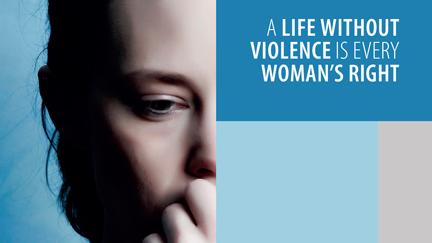
Living Without Violence Lets End Violence Against Women

Trigger Warning

Jayden Parkinson was only 17 years old when she was killed. She was killed by her 22 year old ex-boyfriend, Ben Blakeley, after he discovered that she was pregnant with their baby. Blakeley had been obsessive and controlling and had regularly beaten Jayden. In November 2013, Jayden broke up with Ben because she had had enough of his “possessive, controlling and abusive behavior”. Often, we say, but why did she stay? This is how we blame the victim instead of blaming the perpetrator.

The truth is that the greatest risk of homocide and violent occurs when a woman leaves an abusive partner. 76% of women who leave report experiencing post-relationship violence. It takes incredible strength to endure - and leave - these relationships. This is why we need to make sure there is the best support possible to prevent this from happening, protect women who are in danger, and prosecute perpetrators.

We can’t pretend Jayden’s is a one off incident. Violence against women and girls (VAWG) is one of the most pervasive and unaddressed human rights violations worldwide and remains an issue of growing concern. In the UK 31% of women and girls experience domestic abuse and 2 women are killed each week by a current or former partner. In England and Wales at least 233 women and girls are raped every day. 6o,000 girls under the age of 15 are at risk of female genital mutilation (FGM) and there are nearly 3,000 cases of so called ‘honour violence’ in the UK.

We may try and deny that violence against women and girls is not an endemic in the UK, but the statistics and personal stories speak loud and clear. Women and girls are regularly facing violence through no fault of their own, simply because they were born female. The violence experienced by women and girls is a way for men to exert their power and control over women, to silence women and to remain dominant in society (I am not saying that all men are perpetrators of violence, but the vast majority of violence acts committed against women are done by men).

Even though violence against women and girls is widespread, there is little support for survivors. Rape crisis centres that provide invaluable support to women are strained. Refuges that offer women the support they need to rebuild their lives are being shut down. We all know too well that when the government introduces cuts, it is the women’s services that will suffer the most – with few consequences for the government. This needs to change urgently.

Currently, the UK government cannot be held to account for not providing vital services or introducing laws to protect women and girls from violence. There’s a petition on change.org asking the UK government to keep its promise ‘to help end violence against women and girls by ratifying the Istanbul Convention’. The Istanbul Convention, (otherwise known as the European Convention on Preventing and Combating Violence against Women and Domestic Violence) is widely recognized as the ‘golden standard’ to tackling violence against women and girls.

Once the government ratifies (commits to) this convention, they can be held to account for their response to violence against women and girls. They will have to take all the necessary steps to prevent violence against women and girls, protect women and girls from violence by offering general and specialist support, and prosecute perpetrators.

The UK Government said it would ratify this convention but it hasn’t. 15 countries, including Denmark, France and Slovenia have. The question we must ask ourselves is, why hasn’t the UK ratified the Convention yet?

Every day the UK Government delays the ratification of this convention, women and girls are left without the full protection they rightly deserve.

Please sign the petition here and get your friends to sign it too. Also, please share the petition far and wide on social media with the hashtag #ICchange.

Thank you.