Looking for Something?
Posts Tagged for

Abuse

Innocent until proven guilty? The case of Kesha

Author:
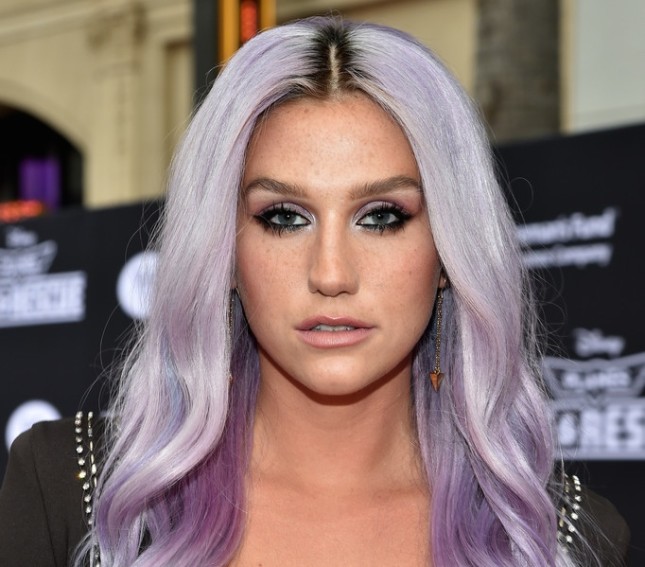
Kesha+Long+Hairstyles+Long+Wavy+Cut+f1mO2mWnoo6x

By Issy McConville

TW Over the last couple of days, the #FreedomForKesha hashtag has seen an outpouring of support for the singer, who is currently embroiled in a legal battle against her producer, Dr. Luke, on the grounds of sexual assault. However, it has been almost a full year since Kesha first brought the charges; a year which has seen her disappear from the public eye, whilst Dr. Luke continues to produce records, finding success with artists such as Usher and Nicki Minaj in the past year. Kesha also named Sony in the case, claiming the label knew of her abuse, but turned a blind eye for almost 10 years.

Sadly, at this point, it is likely that Kesha’s career will never recover, simply because she decided to speak out against her abuser, and about the industry which was implicit. The silencing of Kesha’s voice, and the destruction of her career, is a telling reflection of the inherent misogyny of the music industry, and of society as a whole.

Comment pieces about the case have continued to appear on my Facebook timeline. Scrolling through the comments section - I should perhaps have learned by now that this will be nothing but trouble - I happen upon comments such as ‘there is no detail of the supposed rape, just a load of feminist garbage’ and continued calls for Dr Luke to be, ‘innocent until proven guilty’. Yes, of course, innocent until proven guilty, this is a fundamental human right - but tends to be a luxury that is only afforded to the accused.

While Kesha’s career has ground to a halt, Dr. Luke is continuing to work. While Kesha’s claims are being cross examined by the public, and being blamed for crying wolf with a false accusation, Dr. Luke continues to dominate in the music industry with no retribution. And this is a pattern which is being replayed all over the world. According to statistics from RAINN (the Rape, Abuse, Incest National Network, recorded here - https://rainn.org/get-information/statistics/reporting-rates) only around 2% of rape claims are proven to be false, and in fact, only a little more than 30% of rapes are ever reported to authorities. Dispute the accuracy of these figures all you want - there is a clear discrepancy between actual false rape claims and the amount that are derided as being such.

However, the ideology of victim blaming continues. We live in a world which shames a woman for daring to speak out against an abuser but makes excuses for the man until the very last minute. Just look at problematic photographer Terry Richardson. Countless models have made claims of sexual abuse and an abuse of his power, and yet he continues to work with the biggest celebrities and be popular in the public eye. We just aren’t interested in hearing about his misdemeanours, much like those of Dr. Luke. In this case, perhaps Dr. Luke is innocent. But, as he was also named as possibly being the abuser of Lady Gaga, perhaps not. Irregardless, Kesha’s experience is just one of countless similar stories that reveal the narrative of victim blaming that exists. Kesha may have sacrificed her career to name her abuser. And until we stop believing that every rape claim is false, we play into the hands of the abusers, and allow that 70% of rapes to still go unreported.

50 Shades of Abuse

Author:

By Jess Hayden

Trigger Warning

Before I start on why exactly it is that Fifty Shades of Grey is a sexualisation of an abusive relationship, I need to clarify something: I shouldn’t have to. The examples of abuse are abundantly clear, and I am continually dismayed by the sheer amount of people who see the trilogy, or the film, as sexy. I also find it offensive that the film was premiered on Valentine’s Day. This film has nothing to do with love, or healthy sex. It’s about a manipulative control freak who stalks a woman, then makes her sign a contract which gives him complete control over her life. I genuinely fear for the people who have missed all these signs, because it demonstrates how easy it is to miss obvious signs of an abusive relationship.

The story begins with Christian stalking Ana, travelling three hours from where he lives, to see her at work. He admits to having stalked her to find out where she works (sorry for the spoiler, it’s in the second book), then asks her out. When on their first date, Christian informs Ana that she can only call him “Mr. Grey” or “Sir” whereas he can call her “Ana”. Alarm bells should be ringing. Firstly, that’s an incredibly creepy thing to do on a first date, and secondly, he’s clearly trying to intimidate her and ensure he holds power over their relationship. He proceeds to tell her Ana that she “should find him intimidating”. This guy is not sexy, he’s creepy.

Sometime after this first date, Ana is out celebrating finishing college with her friends, something she is completely entitled to do. She pocket dials Christian by accident, and in classic Christian Grey style, he demands to know where she is and what she is doing. This is alarming, bearing in mind they had only been on one date at this point. Illegally, he traces her phone calls to find out where she is and goes to collect her. This is not romantic. She specifically told him not to, and hung up the phone because he was pestering her. Instead of taking her back to somewhere she would feel safe such as her house or a friend’s house, he takes her back to his hotel room, after she’s only met him twice. This relationship is not necessarily abusive yet, but the controlling behaviour of Christian forebodes the control he will force Ana later in the story.

The next morning, she awakes confused and asks if they slept together, having no recollection of how she got there. Christian tells her they didn’t sleep together, but also says “If you were mine, you wouldn’t have been able to sit down for weeks after the stunt you pulled last night”. By “stunt”Christian is referring to Ana going out with her friends and celebrating her success. I for one did not realise that drunken pocket dialling people was illegal or deserved punishment. What is illegal though is tracing someone’s calls and stalking them. It should also be clarified that at this point in the book, no mention of BDSM has been made, so this dialogue cannot be interpreted as anything but an open threat. By now, alarm bells should definitely be ringing.

Christian demands an unhealthy level of control over Ana. In chapter 10, Ana’s friend Jose calls, which Christian interprets as Ana cheating on him, telling her he “doesn’t like to share”. She’s not a possession, nor does she belong to anyone. Ana just so happened to be talking to a human who just so happened to have a penis. No person in a healthy relationship should demand that control. It’s all downhill from here.

Subsequently, Christian asks Ana to sign a contract to “stop all this”. When Ana asks what Christians means to stop by this contract, he replies “you defying me”. Forget his money or his looks for a moment and see what is actually happening here: A man is asking a woman to sign a contract which restricts all her freedom and makes her completely submissive to him. If you need any proof of this, in the contract, Ana is referred to as “the Submissive” and Christian, “the Dominant”. No loving, healthy relationship has one partner asking the other to sign a contract giving away complete control to the other. Nor is this BDSM. BDSM refers to control or dominant/submissive power roles exclusively in the bedroom and does not go further than their sex lives. This is not about BDSM, this is about control and abuse. One of the clauses in the contract which particularly infuriates me is Clause 9:

“…the Submissive is to serve and obey the Dominant in all things. Subject to the agreed terms, limitations and safety procedures set out in this contract or agreed additionally under clause 3 above she shall without query or hesitation offer the Dominant such pleasure as he may require and she shall accept without query or hesitation his training, guidance and discipline in whatever form it may take.”

Ana is being asked to sign a contract to establish herself as subservient to Christian, having to endure all sorts of abuse from him. Yes, she signs the contract having read it, but I think this is coerced consent. She says herself “He’s dangerous to my health, because I know I’m going to say yes. And a part of me doesn’t want to”. Fair enough, at this point she hasn’t said no to him directly. But also remember the controlling, intimidating tactics he’s used on her so far and consider whether she really had a choice. Later in the story, when Ana threatens to leave and go to Alaska, Christian tells her “Alaska is very cold and no place to run. I would find you. I can track your cell phone - remember?”. I don’t believe that Ana has any freedom to say no, and this unfortunately leads to Christian taking ultimate control of her body and raping her.

Christian turns up at Ana’s house unannounced and aggressively tries to seduce Ana. Ana clearly tells him that she doesn’t want sex, “’No, I protest, kicking him off”. However, Christian, having no respect for Ana’s wishes, replies “If you struggle, I’ll tie your feet, too. If you make a noise, Anastasia, I will gag you.” He then continues to have sex with her despite Ana clearly saying “no”. Despite the contractual agreement of consent, Ana says no, and Christian proceeding to have sex with her is indisputably rape. However, as Ana enjoys the sex, the reader and audience is supposed to ignore the fact that it is rape. E.L James seems to think that portraying a woman experience sexual gratification whilst playing a subservient role to a man is some kind of feminist empowering message.

All of this having been understood, I appreciate that this is a fictional story and I am not necessarily condemning the author or the production team for producing such a disgusting story line. However, I am appalled by the ridiculous response to it. Perhaps it’s a consequence of such a pornified and shallow culture, that we see a man abusing a woman, but are too distracted by his abdominal muscles to realise this is happening. Without the sex scenes which draw so many readers in, this is a story of an abusive man controlling and dominating a virginal, vulnerable woman.

50shades

“Can’t you take a compliment, love?”

Author:

By Lily Scott

tumblr_static_stopstreetharassment-2.jpg_1d861f354af6415a9deb4a71d549b387

As a shy, easily embarrassed child, I used to hate it when my parents got involved with situations in public. Whether it was an argument on the street or a shopkeeper facing an abusive customer, they would surely step forward and speak their mind, often trying to help the victim. My brother and I would step back, mortified as they raised their voices and onlookers stared.

My attitude changed when I was on a bus home with both parents and we witnessed a young woman being harassed a few seats in front of us. Sat next to my Dad, I could feel him tense. Quickly, he got up and walked towards the woman, asking her in a loud voice if she’d like to move seats and sit near us. The man, who was distressing her, turned around with a sharp look and asked my Dad to go away as it was none of his business and he wanted to talk to her. He was trying to touch the woman’s leg and was trapping her in the window seat, by leaning in very close. My Dad claimed that the woman was his friend and asked the man politely to move out of the way so she could get out. This clearly made the man angry as he stood up and tried to intimidate my Dad into moving away. The woman quickly climbed out and was able to get off the bus, with a smile of gratitude towards us. Although the woman had managed to escape, the man was angrier than ever and gestured to his friend to stand with him and face my Dad. He started shouting abuse – ‘Why would you ruin that for me?’, ‘What is your problem?’ By this point, my mum and I had got up and were trying to pull my Dad back to sit with us as we felt scared for his safety. The friend of the man fumbled around in his pocket and threatened that he had a knife. By this time, I was in tears. Other passengers were watching the incident, with puzzled expressions as if wondering why my Dad would go to such an effort to protect a stranger on a bus. Many shuffled away awkwardly, not daring to get involved. Thankfully, the two men jumped off the bus moments after their threat of violence and ran away, shouting abuse.

As a teenager, who has been catcalled, pestered and worse, I look back on this event and realise how proud I am that my dad stood up to that man when every other person on the bus looked away in embarrassment. Too often, women are ashamed, scared or too shaken up to report street harassment or stand up to the harasser and sadly, bystanders don’t often feel comfortable to intervene. Many women have said that harassers becoming aggressive upon rejection is very common. ‘Why can’t you take a compliment? You’re fat anyway’, ‘I’ll rape you…’, ‘Don’t be so frigid’ are just some of the responses that women have had when standing up for themselves. One woman writing on Everyday Sexism, described being ‘followed by a car of teenage boys who then tried to reverse into me when I wouldn’t talk to them’. Street harassment makes the victim feel paranoid, vulnerable and objectified. Instead of confronting it, many choose to keep walking, look at the floor and end the situation as quickly as possible. What is often forgotten, is that street harassment is a form of sexual assault. It is easy for a catcall to escalate to violence and rape - allowing this misogynistic culture to exist normalises sexual assault and makes a victim think twice about reporting it.

Having support from passers-by, knowing somebody is there who witnessed the harassment or even just an ‘are you okay?’ can help someone to feel safer and less alone. If you notice someone feeling vulnerable and uncomfortable, don’t walk past and pretend you haven’t seen it. Sometimes it is too dangerous to directly confront the harasser but it is always possible to notify others nearby or even call the police – sexual harassment is assault and no one should have to face it alone. You can make sure they don’t.

Breaking Free: True Stories of Girls Who Escaped Modern Slavery

Author:

By Sophia Simon-Bashall

breakingfree

I read this book recently and I feel compelled to share it with everyone. Why? Because it deserves to be read. And people deserve to read it.

“Breaking Free” is a collection of women’s stories – how they became part of, endured, and lived past human trafficking. Within, there are myths dispelled and facts set straight and a guide to how to talk about the topic, sensitively and knowledgably. It is inspirational and incredibly informative, but so accessible, despite being a painful read at times, due to the nature of the issue.

I do however have to give this book a TRIGGER WARNING, as it is not exactly beat around the bush. These are frank accounts of real experiences of physical, emotional, and sexual abuse. It may provide hope for victims, but it may be too difficult a read for someone who is familiar with the situations written about.

What I think is unique about Breaking Free is the diversity. The stories are not all from women of developing countries, continuing the myth that all sold in sexual slavery are far from the Western World. Neither does it ignore these women. The stories are about women who experienced similar horrors, in different ways, from differing backgrounds.

Maria Suarez went from Mexico to America at fifteen years old. On a job interview to be a maid, her ‘new employer’ locked the door, and informed her that from that moment, she belonged to him.

Minh Dang was born in California. From the outside her house was beautiful, and they were a ‘white-picket-fence and rose-bushes’ household. Behind closed doors, her parents abused and raped her, from the age of three years old. As she grew older, they began to sell her body to neighbours and strange men.

These women are individuals. They are not especially alike. It is a powerful reminder that victim blaming is ridiculous – there’s nothing that each of them did to cause what happened to them. They were unfortunate. Taken advantage of. They were not asking for it. What unites them is their strength and courage, that they took what they knew about this world, and have set out, effecting change.

Now activists in the anti-trafficking movement, Maria and Minh are out creating petitions, speaking to people in power, building safe-houses, removing the stigma. They are rebuilding their own lives as well as millions of others.

The book also features the story of Somaly Mam, which is an issue. I have been shocked to discover that she fabricated her story. It is a very confusing thing. It has been a significant setback for the movement as a whole, as it discredits others stories, the vast majority of which are wholly true. But we must remain in solidarity with the poor girls who have honestly experienced these horrors. I know that I would rather believe a few false claims, than turn away from millions of real victims, who desperately need to be listened to and heard.

Don’t underestimate the power you can have. You can help so many people. There are so many ways in which to support the anti-trafficking movement. Here are just a few:
-READ ABOUT IT. Read this book. Read other books too. Here’s a list.
-BUY ITEMS MADE BY SURVIVORS. Instead of supporting unethical trades, support those who need it. International Sanctuary and Made by Survivors are great places to start, with beautiful jewellery and other gifts created by women learning new skills, building up their lives.
-DONATE TO IMPORTANT ORGANISATIONS. Send money to those who run safe houses, teach survivors new skills, provide counselling for victims, rehabilitate millions. The majority of the organisations listed here accept financial donations, some also accept the donation of your time. Volunteer at a local organisation, hold a fundraiser, become a social media intern for a charity. The possibilities are endless…

Hey there!

We are Powered By Girl. We're young women who write for young women. We do it because we believe there's more to 13-25 year old women than clothes, boys and celebrities. So please have a look at our stuff, and join us!

Sign up to get our blogs in your inbox!