Being an MP is not for me

By Becky Dudley

meninparliament Being an MP is not for me

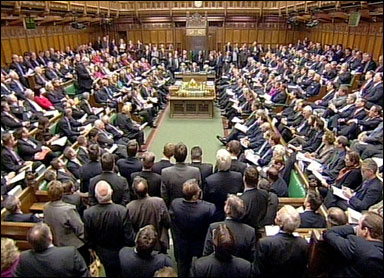
Parliament: it’s a man’s world. To be more specific, it’s a straight, white, middle class man’s world. For something that’s meant to be representing our society as a whole, it’s doing a pretty awful job. What we need, more than anything, is far more people who aren’t straight, white, middle class and male to be in Parliament, representing all those currently lost in the sea of identical faces. However, with the way things stand, I, for one, will not be one of them. Despite wanting to prove a point and do what we’re not ‘meant’ to, I do not want to work in Parliament. I’m here to tell you why.

Firstly, let’s look at some statistics. In the last election, 650 people became Members of Parliament. 147 of these were women. That’s around 23% - hardly representative of the UK population, which is 51% female. The statistics for ethnicity and class are just as bad (if not worse), and each are deserving of their own post; I could rant for hours on any of these. For now, however, I’m going to stick to looking at the statistic for women.

To try and rectify the obvious inequalities, quotas were introduced. To my mind, quotas are like Marmite - you either love them or you hate them. Like Marmite, I’ve not yet decided which side I’m on. However, what the quotas have done is given rise to new terminology - for example, ‘Blair’s Babes’ and ‘Cameron’s Cuties’. Both of these terms - which refer to the group of women working for the relevant Prime Minister - make me feel genuinely sick. They are demoralising, demeaning and downright disgusting. The use of the surname and possessive apostrophe signifies that all the women in these groups belong to the Prime Minister - playing into the ever-present objectification of women. Meanwhile, the use of ‘Babes’ and ‘Cuties’ reduces the women to pretty faces, to sex symbols. These women are all there on their own merit - they are far more deserving than these descriptions make them seem.

This is not the only problem that these women are facing. For women in Parliament, there is no way of being right. When they appear in the media, their clothing and appearance choices are far more likely to be commented on than anything else. There’s a plethora of negative stories, with each female Member of Parliament having faced their own equally awful battles, revolving around sexist comments, unfair media representation, and even discrimination based on their having children - regardless of the fact that men, too, have children and childcare responsibilities.

Even the physical representation inside Parliament is hugely biased. Whilst walking around on a recent tour, we noticed one female statue: that of Margaret Thatcher. We also played a ‘game’ of ‘Spot the Women’ with a painting of the House of Commons in session. It was far harder than the average game of ‘Where’s Wally?’.

But these all come into effect later on, once you’ve gained your votes and got the right to your bum on a seat. There are perils to face beforehand, too. To get in to Parliament, it seems that you must do two things: know the right people, and take up social drinking. Both of these are pretty exclusionary. For a start, how many average members of society have the necessary connections to get them into - or even near - Parliament? A quick survey of the eleven people I am sat with finds that no-one has these connections. Moreover, it follows that if connections are needed, then there’s likely to be a ‘sort’ of person who has them, a theory as close as proven by a look at the current government.

To look at the second option, social drinking, it’s clear that there are fundamental flaws here too. In 2009, it was found that around 15% of people in England are tee-total - they abstain from drinking alcohol, for religious, personal or other reasons. This means that 15% of the population wouldn’t be able to follow this route at all. Even for those who do drink, it’s a pretty dismal concept. What it’s saying is that, to gain a job in Parliament, you must firstly become just like every other person in Parliament. In short, you must become ‘one of the guys’.

With all of this in mind, the only conclusion I can find is one I would much rather not come to: Parliament is unrepresentative, and it’s unrepresentative for a reason. If it’s not hard enough for women to get in in the first place, life gets even harder once they’re there. I take my hat off to each and every woman working in Parliament - I couldn’t do it. It’s no wonder that the statistics are so awful. We need this to change, and we need it urgently. However, this can’t be a small change - every new woman in Parliament is a success for us all, but we need more. We need a huge, drastic change. We need 51% of the Members of Parliament to be women - something that the 50:50 Parliament campaign is currently fighting to achieve. We need to have our statues, our pictures, of women. We need the media to report on what we’re actually doing, not on what we’re wearing or looking like. In short, we have yet more need to start the revolution.

“Can’t you take a compliment, love?”

By Lily Scott

tumblr static stopstreetharassment 2.jpg 1d861f354af6415a9deb4a71d549b387 Cant you take a compliment, love?

As a shy, easily embarrassed child, I used to hate it when my parents got involved with situations in public. Whether it was an argument on the street or a shopkeeper facing an abusive customer, they would surely step forward and speak their mind, often trying to help the victim. My brother and I would step back, mortified as they raised their voices and onlookers stared.

My attitude changed when I was on a bus home with both parents and we witnessed a young woman being harassed a few seats in front of us. Sat next to my Dad, I could feel him tense. Quickly, he got up and walked towards the woman, asking her in a loud voice if she’d like to move seats and sit near us. The man, who was distressing her, turned around with a sharp look and asked my Dad to go away as it was none of his business and he wanted to talk to her. He was trying to touch the woman’s leg and was trapping her in the window seat, by leaning in very close. My Dad claimed that the woman was his friend and asked the man politely to move out of the way so she could get out. This clearly made the man angry as he stood up and tried to intimidate my Dad into moving away. The woman quickly climbed out and was able to get off the bus, with a smile of gratitude towards us. Although the woman had managed to escape, the man was angrier than ever and gestured to his friend to stand with him and face my Dad. He started shouting abuse – ‘Why would you ruin that for me?’, ‘What is your problem?’ By this point, my mum and I had got up and were trying to pull my Dad back to sit with us as we felt scared for his safety. The friend of the man fumbled around in his pocket and threatened that he had a knife. By this time, I was in tears. Other passengers were watching the incident, with puzzled expressions as if wondering why my Dad would go to such an effort to protect a stranger on a bus. Many shuffled away awkwardly, not daring to get involved. Thankfully, the two men jumped off the bus moments after their threat of violence and ran away, shouting abuse.

As a teenager, who has been catcalled, pestered and worse, I look back on this event and realise how proud I am that my dad stood up to that man when every other person on the bus looked away in embarrassment. Too often, women are ashamed, scared or too shaken up to report street harassment or stand up to the harasser and sadly, bystanders don’t often feel comfortable to intervene. Many women have said that harassers becoming aggressive upon rejection is very common. ‘Why can’t you take a compliment? You’re fat anyway’, ‘I’ll rape you…’, ‘Don’t be so frigid’ are just some of the responses that women have had when standing up for themselves. One woman writing on Everyday Sexism, described being ‘followed by a car of teenage boys who then tried to reverse into me when I wouldn’t talk to them’. Street harassment makes the victim feel paranoid, vulnerable and objectified. Instead of confronting it, many choose to keep walking, look at the floor and end the situation as quickly as possible. What is often forgotten, is that street harassment is a form of sexual assault. It is easy for a catcall to escalate to violence and rape - allowing this misogynistic culture to exist normalises sexual assault and makes a victim think twice about reporting it.

Having support from passers-by, knowing somebody is there who witnessed the harassment or even just an ‘are you okay?’ can help someone to feel safer and less alone. If you notice someone feeling vulnerable and uncomfortable, don’t walk past and pretend you haven’t seen it. Sometimes it is too dangerous to directly confront the harasser but it is always possible to notify others nearby or even call the police – sexual harassment is assault and no one should have to face it alone. You can make sure they don’t.

We Deserve #SREnow

Powered by Girl is a girl-driven activist movement. Many of our team are young women living all over the UK. As a group who have been directly affected by the UK government’s inaction on Sex and Relationships Education, we’re here to speak out. We’re victims of a sexist, derogatory and dangerous culture of sex. As young women, we feel it’s vital that gender-based violence and information about consent is made available to every child and every teenager. That’s why we support the End Violence Against Women and Everyday Sexism Project’s petition for ‪#‎SREnow‬. Here are just some of our reasons:

Healthy relationships develop through understanding - not only about healthcare, but also about mental care. There is too much ignorance surrounding issues of consent and sexual orientation, and the best way to tackle this is by education. This is why we must support the campaign to make SRE statutory in UK schools - so everyone can enjoy happy and safe relationships – Issy, 20

Sex and relationships can be one of the most exciting things about growing up. Unfortunately it can also be one of the most dangerous. Young people need to be educated not just in safe sex, but on safe relationships, in order to equip this most vulnerable group in society to deal with these issues - information for everyone, no matter their sexuality – Amy, 16

At a time when children and young people are bombarded relentlessly by so many confusing and potentially dangerous messages about sex and relationships, comprehensive and in-depth SRE is vital. Biology does not suffice- exploring relationships and sexuality are often key aspects of adolescence and young adulthood- however, as we hear more and more of these experiences being negative ones, tackling the relevant issues through education is of paramount importance. By introducing SRE as compulsory, we can build fantastic foundations for not just adolescence, but for a lifetime of happy and healthy relationships – Cora, 16

It is vital that young people across the UK receive a decent SRE covering all key areas. Merely focusing on STIs, as was my one term of sex ed, is not sufficient. Consent should be central to SRE however schools are not required to teach it. When it comes to consent there are no ‘blurred lines’ and that needs to be clear. A 17 year old should not be learning about consent through discussion online before being taught about it in SRE or PSHE. Statutory SRE should teach responsibility and respect for people of all genders and sexual orientations and provide a safe environment to do so. We need to improve SRE and we need to do it now – Chloe, 18

With every minute that passes, roughly one incident of domestic abuse is reported to the police. That’s 60 incidents per hour; 1440 per day. Over a year, this amounts to around 525600 incidents- and those are the reported ones. It’s believed that far far more cases of domestic abuse go unreported. These are really shocking figures, yet they’re rarely talked about. School sex education lessons- even those titled ‘sex and relationships’- choose to focus on the biology of reproduction and ways of preventing pregnancy and/or infections. Whilst not saying these issues aren’t important, there is far more to ‘sex and relationships’ than this. There is little or no education delivered around consent, or sexuality, or happy and safe relationships. Young men and women are let down by this; they’re lead to believe that there is no choice but to go along with unacceptable behaviour, lead to believe that it’s not okay to be different or to speak up. This leads to so many problems further down the line that could be reduced with some basic education. If nothing else, the message could be delivered that it is okay to talk about these things. We no longer live in an age where we can pretend this isn’t happening, and transfer the problems to someone else. We need to act, to lay down the correct building blocks in the formation of happy, healthy adults, engaging in happy, healthy relationships. Legislation around this would be a hugely important step – Becky, 17

You can get involved by Tweeting using the hashtag #SREnow, and signing the petition here icon smile We Deserve #SREnow

SREnowpetition We Deserve #SREnow

Alice and Anna Discuss Make Up

By Alice Koski and Anna Hill

 Alice and Anna Discuss Make Up

For many women, make up is a normal part of everyday life; in fact, the average woman in the UK wears make up for 341 day of the year. And whilst make up certainly seems like a positive force - for giving women confidence, for being an art, for giving us control over our image - it is definitely not without its problems. The double standards it creates, the pressure it puts on women to look perfect, the industry itself… to name just a few.

With this in mind, we’re tackling the subject of make up by answering and discussing the following five questions together. Here we go!

How were you introduced to make up? When did you start wearing it?

Alice - I was a complete tomboy from the ages of about 7 to 12, and had never wanted anything to do with makeup. It wasn’t until my second year of secondary school that I started to take an interest. My introduction to make up began with a cheap eyeliner from Boots, my mum’s old mascara and a lot of mistakes! Myself and my friends bonded over make up - there were many experiments and many disasters (I’m remembering like the time a fake eyelash got stuck on my real ones!). Make up was one of the things we learnt about together and I definitely count it as a good (bar the false eyelash incident!) experience.

Anna - That’s really cool! I had a similar experience, particularly with the whole tomboy thing at the beginning, and then in Year Seven when I changed friendship groups and I “got into” make up. It was fine, although I think I went with it more to fit in than because I actually enjoyed wearing it, and I still have no real understanding of make up so maybe that’s why. I also actually remember being sort of bullied by these girls who wanted to give me a “makeover” and then tried to make me look like a panda, and I didn’t know how to take it off, so I felt really humiliated. Luckily my now best friend helped me to get it off, but after that I stopped hanging out with them or wearing much make up.

Alice - That sounds awful! Year 7 is a weird time because it’s such a big transition.

Anna - Year seven 7 was a very very tough year for me! I think it must have scared me off make up, but I’m actually pretty comfortable with being a total rookie at it now.

Alice - I can’t remember whether I was genuinely interested in discovering make up or whether I felt like I should be interested.

Anna- I think a lot of girls feel like that! Maybe that’s why we all turn to make up, as a way of coping with the change and the new “grownupness”.

Alice - That’s a really interesting idea. I remember that same sort of time being pretty tough because of having to cope with all the ‘growing up’.

Anna - It makes me wanna ask everyone when they got into makeup to see if it was around the same time. Growing up as a girl is so hard! You’re thrown in at the deep end - expected to be really good at make up immediately and to have a great fashion sense.

Alice - Yes! And it’s all at once - that 12-14 age range. Quite a lot to cope with.

What is your daily make up routine if you have one?

Anna - I don’t really have a daily or conventional make up routine. I actually own very little make up, BUT I do have a kind of self-care routine that involves putting on make up. It’s a little bit bizarre I suppose but I like to view this routine as a kind of therapy! Basically, when I feel really sad, or just sort of lost, or any negative emotion, or creatively sapped, I paint my face with lipstick and/or use turquoise eyeliner to make myself have freckles and experiment with contouring and bizarre shapes and strange lip colours. It’s really fun and it helps me to survive really awful weeks, or it can just be a way to remind myself that my body is my own and I can do with it what I want – it doesn’t have to look pretty or cute - it can be ugly, weird, eye-catching, sparkling, childish, alien, robotic, butch, magical and any number of other things. So my “make up routine” is a really intense one and only happens about once a month. It’s really refreshing and I would 800% recommend it! Just throw caution (and colour) to the wind and put stuff onto your face!

Alice - That’s really cool! Sometimes I forget that make up can be arty. Some would say it’s a form of art!

Anna - I’m not sure if it is or isn’t really, but I don’t mind – it’s purpose for me isn’t art ,it’s just a way of helping me access strength or confidence or happiness. But then I think selfies can be art, so if I take a selfie with the makeup maybe I’ve made it INTO some kind of art piece?

Alice - Yeah, why not? There should be a gallery set up for selfies!

Anna - I would so go to that!! And hope my selfies made it in! What about you? What’s your kind of routine with makeup?

Alice -– My routine is nowhere near as interesting as yours! I don’t own a lot of make up and I tend to keep things quite simple. But I’ve developed a make up routine in the order that I apply things - concealer first, then foundation, then eyebrows, then eyes, then lips. I like doing my eyes best, and I’m a fan of big eyeliner flicks! If I want to keep things more casual, I’ll not put as much on, but if I’m going somewhere where I want to impress, I’ll do more.

Anna - Oh that’s interesting! So if you are dressing to impress do you wear more obvious make up rather than natural- looking stuff?

Alice - Yeah, like if I’m going to a party, I’ll put on lots of eyeliner and probably lipstick, but if I’m meeting friends in the day or going to school I won’t bother.

Anna - This might sound a bit like a therapy question, but do you enjoy putting the makeup on? Like is it a nice part of your day?

Alice - I kinda do actually, especially if I’m with a friend and we’re going somewhere, it’s fun to share make up and help each other. I also quite like seeing the ‘transformation’ of it too.

Anna - Yeah! A mutual and often girly shared experience. And watching your face change, it’s cool. It’s pretty impressive what people who can do make up can do - like contouring is so impressive.

Alice - Exactly! I’ve never tried it but it’s pretty amazing how people can completely change the shape of their face!

Anna - I think this type of stuff is seriously underrated because it is considered girly, and girly ALWAYS equals vapid, stupid, bad, pointless.

Alice - I’ve also seen lot of guys saying that girls who wear make up are ‘lying’ to everyone, which pisses me off.

Anna - I think though they react like that because they don’t really understand makeup - not to be patronising.

Alice - They set a double standard as well by saying that girls who wear make up are fake/liars, but girls who don’t are ugly/aren’t making any effort!

Anna - I think that’s why it’s just important to really think about WHO you are wearing makeup for. It’s okay to want to look pretty and impress people, but make sure that YOU think you look pretty.

Why do you/don’t you wear make up?

Alice - I wear make up most days, as I’m either going to school/university or seeing friends. There are a lot of reasons why I do this, the main one being that make up makes me feel more confident in myself, and that gives me a boost. Another reason is that, after having worn make up for a few years now, it feels almost like a necessity. If I go out ‘bare-faced’ I feel a bit naked. I would never judge another girl for not wearing make up, but there is a certain standard I set for myself - if I’m going to be seeing certain people or if I’m going somewhere where I know I’ll get my photo taken, then I feel like I should wear make up.

Anna - That’s really interesting because I go out bare faced the majority of the time, but I do USE makeup in a similar way to you - sometimes I wear it to feel confident. I’m much less interested in looking pretty than I used to be. Now I care about looking like myself, being feminine, being interesting, being confident through the makeup I use. I also really like TRYING to look ugly - it’s so much fun and it takes all the pressure off!

Alice - These ‘expectations’ that I have for myself cause me to feel like I need to wear make up, but if I stopped wearing make up, what’s the worst thing that could happen!? Your attitude is great though, I definitely feel like I have to try and look pretty. Trying to look ugly is not something that’s ever crossed my mind!

Anna - Unfortunately it does take a lot of strength to shun those expectations, so you know, baby steps - not to be patronising! It’s fun, you should definitely try it some time.

Do you feel different when wearing makeup or more judged by others?

Anna - I do feel different! I think part of that is because it’s quite rare for me to wear makeup and because of various issues with my skin I’ve never felt comfortable putting on make up, so when I wear makeup I wear MAKE UP (with flashing lights and bold colours), rather than the: “I woke up like this with a flawless face and most men can’t tell that I am wearing makeup at all” look”. So I guess I must get judged by people who think I dress/am alive to please them, BUT I do not care for that. I enjoy confusing people though, for example once I sat on the tube and I had some turquoise freckles for confidence and strength and also fun (I was going to a Beyonce concert!!!), and these two guys opposite me were clearly SO CONFUSED by it all. I enjoyed screwing with their perceptions. I think I like doing that sort of thing because of my identity too - as a Queer person I often feel like media only represents me when it subverts what is seen as “normal,” so now I claim subversion as my “thing.”  Alice and Anna Discuss Make UpI’ve also gotten used to people judging my “look” because I have body hair which I don’t really cover up (leg hair is so effective at keeping me warm in the winter!), so I like to play with those stereotypes when I wear make up too – i.e if you don’t shave you are dirty and lazy, but then if I don’t shave and look really well put together, I’m proving them wrong and hopefully making them question those judgments.

To get back to the question properly, I do often wear makeup and it makes me feel feminine and powerful which I like. The red lipstick I wear sometimes is so full of obviousness and vivacity so that’s great for confidence and making me feel unashamed to be here, to be taking up space.

Alice - Wow, super interesting. My response is that I suppose I feel a bit of both. Different, because make up makes me feel confident, more attractive, and more powerful like you said! But on the flip side, I do often feel judged for my make up choices. If I go without make up, I feel like people (especially girls) may judge me to be lazy or not making an effort. However, when I do wear make up, although it makes me feel confident, I feel like people make assumptions about me too. In particular, I’ve often encountered guys who see me wearing make up, ‘fashionable clothes’ (and not to mention I have the ‘dumb blonde’ stereotype to live up to) and judge me to be ditzy/vapid/slutty, which is not true, and something I wouldn’t want to pin onto any girl.

Anna - No! It sucks. It’s basically like anything a teenage girl does is stupid. It’s one of those things that is SO difficult to sort out, because you don’t need to spend your life trying to show them how complicated and clever you are - and it’s not your job to educate them, but those stereotypes can be really harmful and REALLY hurt girls’ self esteem.

Has make up helped you, and if so how?

Alice - I feel like make up has helped me - with my confidence, with making friends, with growing up. But when I think about it - I didn’t need make up for any of those things. I’ve always enjoyed doing my make up and I enjoy wearing it, but I can’t tell if it’s for the right reasons.

Anna - This one is difficult. I think agree, but because I basically like to paint my face a lot, it’s helped me personally - but I’m not using it in the same way that most women do.

Alice - I can’t really justify that make up HELPS women. Maybe it does at surface level, but on a deeper level I think it’s maybe quite a damaging thing. I don’t know!

Anna- I guess it’s not the actual ACT of putting on make up, it’s the context of our situation. The kyriarchy/the patriarchy MAKE make up problematic, but the activity itself isn’t really a problem at all. It’s difficult because I never want to be the type of person to be like “women you cannot do a thing you like to do,” but there are definitely issues with make up and it can quite easily be used as a tool to manipulate and subjugate women. Which is not cool.

Alice- Totally agree… maybe it’s not that we stop using it, it’s that we change our attitudes towards it?

If make up is a problem, can it be solved? Is it more of a bad thing than a good thing? Can we change attitudes and prejudices towards it? We feel almost more confused now than we did before our discussion! However, hearing about each other’s experiences and points of view was both interesting and enlightening. We encourage you to have your own discussions about make up with friends (you can use the questions from here if you like!). We guarantee you’ll come out of it a little confused and a little enlightened…and if anyone comes to any definite conclusions, let us know!

Chasing Rupert Murdoch (and bumping into Boris)!

Guest Post by Eva O’Flynn

10593029 815815108439019 3082685626983810100 n Chasing Rupert Murdoch (and bumping into Boris)!

Today I felt powerful. Strategically placed between The Shard and Sun HQ, we, three teenage girls, sat and ate chocolate biscuits. Intimidating, I know. At least, The Sun’s security seemed to think so! They scowled, pointed and, when the shifts changed, warned each other of the threat that we were clearly posing. To make matters more hilarious, we are a relatively short group (see photo.) You couldn’t even see our t-shirts for all the jumpers we were wearing (until Stephanie ambled over, her tee quite literally glowing. Brilliant.)

At that point, the two police officers who were manning the area joined us. They arrived beaming and, as soon as they heard that we intended to be peaceful, our friendship was confirmed. We chatted about everything, from why they supported the campaign to the worst arrests they’d made and they even dispelled some of the more interesting rumours that we’d heard. They were brilliant, brilliant people. Even one of the security guards was friendly!

From our biscuit-filled perch, we caught sight of a shade of glowing blonde combined with the ridiculous amble that could only belong to Boris Johnson. He was walking away and we were about to lose what we saw as a brilliant opportunity for a comment. So we ran, capturing some brilliant selfies on the way. We were so exhilarated at the prospect of capturing the mayor in a shot with our NMP3 tees that, in the photos, we are beaming. Oh how I regret my facial expression and wish my disgust were visible.

10696184 815810078439522 5458110195254016690 n Chasing Rupert Murdoch (and bumping into Boris)!

“What do you think of Page 3?” we probed, “Page 3 of the Daily Telegraph?” he responded pompously. “No actually, I read the Guardian. But come on, what do you think of Page 3?” At this point, his assistant began irritatingly babbling in the background, attempting to be clever. I somehow found myself telling our (buffoon of a) mayor in a tone dripping with irony my opinion of the Daily Telegraph’s Page 3. “I think it’s a pretty important page, you know? It’s the first thing you see when you open the paper, it’s right there in front of you, really sets the tone, don’t you think? Do you think that The Sun should potentially change theirs? Maybe, just maybe, boobs shouldn’t be the first thing you see?” Pathetically and unsurprisingly, he didn’t respond. We left him galumphing away to do whatever Tories do.

The big moment arrived. Murdoch was coming. Our two police officers fulfilled their duty, laughing, and the ridiculous number of body guards, less amusingly, attempted to hold us back. We shouted to Murdoch, showed him our tees, but the doors of the car soon shut. Before I could even gather my thoughts, Yas was in front of the car (quite literally in front) and they were rolling slowly towards her. She moved to the side with Stephanie and began to run, Rosa and I sprinting after as the car picked up speed. We were soon surrounding them, forcing the car to stop. We, four smiley, innocent women, stopped Rupert Murdoch’s car.

Today, although it may have been small, I felt like I made a difference. Today, four peaceful women disrupted The Sun. Today, I can say that I personally pissed off some powerful people. It feels amazing.

Read Eva’s original post, and more of her writing, here.

Drops of Hope

By Christiana Paradis

Being a third wave feminist can be draining. For days on end you work tirelessly to effect change or alter gender stereotypes only to be cheered on by the same 15-20 feminists that continue to read your blogs or share your posts on various social media sites, but you rarely reach a wider audience. It becomes downright excruciatingly exhausting some days, and the more exhausted you get, the angrier you get. You stay up late at night and question: Why don’t other people care about these things? Why don’t my OWN female friends care about these things? Is everyone crazy or just me? HOW MANY TIMES DO I HAVE TO EXPLAIN THAT SEX AND GENDER ARE NOT. THE. SAME. THING!?!?!

Over the last couple of months I’ve felt this anger more than I should, but every now and then something happens, something remarkable. Maybe it’s something big or small depending on who you are or where you are in the world. This something for me this past week was the release of Ray Rice from the Baltimore Ravens due to an additional video surfacing regarding a previous domestic violence issue. Why was this so remarkable, you may ask?

Back when I was a wee blogger at PBG, around 3 years ago to be exact, I wrote a blog about the ways in which the National Football League (NFL) continuously downplayed domestic violence and sexual assault allegations. At the time I cited a recent murder-suicide of a Kansas City Chief’s player, the sexual harassment of a female NFL reporter, and the recent domestic violence allegations of a Miami Dolphins player. I was disgusted that despite different teams calling out the behavior, there was no general outcry or any official statements made by the NFL, and as a result this invalidated and dismissed female football fans. Once a boys club always a boys club, right?

nfl Drops of Hope

Fast forward to 2014: In February Ray Rice was seen dragging his unconscious fiancée out of an elevator, the NFL decided to suspend Rice for two games and the Baltimore Ravens took no additional actions regarding Rice’s behavior. All of a sudden public outcry begins and memes pop up all over social media sites questioning a yearlong suspension for marijuana use vs. a two game suspension for domestic violence.

Feeling pressured the NFL decided to determine new sanctions for players accused of domestic violence. These new sanctions include a 6 month suspension for a first offense and banned for life for a second offense. Additionally, after a second video emerged from the February incident involving Rice, the NFL decided to ban Ray Rice indefinitely and the Baltimore Ravens made a decision to release him. Though some of these changes came much later than I would have preferred, the fact that teenagers, men, women, and current and/or former NFL players stood up together and challenged the NFL regarding this issue, exhibits remarkable change in opinion and culture. Three years ago a murder-suicide ignited little outrage, but today a two game suspension for domestic violence created a fire storm. That is change. It is a change so big that it forced an organization as large and powerful as the NFL to act, and that gives me hope.

It means that as a society we have become much more educated and more aware of the many implications of domestic violence, it means as bystanders we will not allow this behavior to continue to exist and be rewarded. It means that though we can’t always see it on a daily basis, things are changing and standing together we continue to be drops of hope in a very large bucket that is defining the third wave feminist movement.

hope Drops of Hope


Thoughts From Latitude – Feminism, Class Politics, and Checking Your Privilege

By Cora Morris

latitude Thoughts From Latitude – Feminism, Class Politics, and Checking Your Privilege

British feminism has a class problem.

When I’d looked into going to Latitude in Suffolk earlier this summer I’d been pleasantly surprised to note the number of women performing at the festival. The stand-up comedy line-up at Latitude was almost two-thirds female – suggesting brilliant progression within an industry that is known to be (more than occasionally) sexist. Musical acts ranged from Chrissie Hynde of The Pretenders to Lily Allen (who we all undoubtedly have opinions about) and Haim, the trio of Californian sisters who’s lyrics I’m yet to find too much feminist fault in. There was cabaret, theatre, and even an appearance from the English National Ballet. The poetry area was a favourite, with Hollie Mcnish’s spoken word stealing the show entirely. It was safe to say I was catered for - I felt incredibly lucky to be in a place where so many of the arts came together in a way that was of such a high quality, and where female performers were not dismissed or looked down upon in the slightest.

It is pointless to deny that Latitude is anything but a very stereotypically middle-class festival, and this is clear from the sheer scale of variety throughout the acts and attractions - are literary stages and quinoa stands really abundant in other festivals? We, as crowds, were referred to as ‘Latitude Lefties’ several times and ‘Guardian Readers’ at least twice - the privileged lives of many of the festival-goers was obvious. I’m not sure where the association between academia and class formed but it seems to be a false attitude in England which we supposedly can’t quite get away from. The problem is, feminism gets added into the equation too by way of being wrongly perceived as academic in its subject matter.

Awaiting a panel with Laura Bates (of The Everyday Sexism Project), Laurie Penny (PBG Blogger Sophia reviewed her new book, Unspeakable Things, last month) and Zoe Pilger (whose new novel, Eat My Heart Out, is becoming a personal favourite) regarding feminist fiction I look around to see who I’m sharing the literature tent with, and who is sticking around for a talk that I thought would have been one of the less popular of the schedule. I’m met by the unsurprising sight of mainly middle-aged women, a selection of younger, artsy looking types and a scattering of men - boyfriends, maybe, though I’m glad to see a few raise their hands when and we are asked who in the crowd identifies as a feminist. Some of them scurry away hilariously when Penny begins criticising Facebook page The LAD Bible, followed by her sniggering that ‘Maybe they run it… we’re scaring away the men, everyone!” Naturally, we all laugh. The talk continues and I begin to consider whether this evermore middle-class seeming crowd reflects the limited demographic feminism reaches out to and engages in Britain. Yes - the answer is yes.

I think the examples speak for themselves - to quote Marianne Wright-Eldman, ‘You cannot be what you cannot see’. The fact that significant numbers of this country’s most prolific feminists appear frequently as writers for newspapers such as the Guardian - a wonderful and insightful left-leaning publication, but one that undeniably primarily appeals/sells to Britain’s (if only slightly) privileged – says a considerable amount.

We do not have voices in this country at present that are speaking to everyone else. Not prolific ones, at least. Feminism is becoming almost trendy amongst the middle classes whereas it is much less so elsewhere. Intersectionality is so key - the ways we are increasingly considering the oppression of everyone is vital to the progression and expansion of feminism and its values. However, as I find myself being told more and more frequently that I’m ‘a privileged white girl with nothing to complain about’, thus ‘pretending men are causing problems because they’re easy targets’, I am wondering whether awareness of feminism’s modern form is really being reflected as what we’re all about. It has become a movement that strives for intersectionality, and space in the conversation for people other than ‘privileged white girls’. The problem is that in the public eye, we are represented by what are as a majority people who fall into this ‘category’ (so to speak). I don’t think that we can expect to engage a majority if we are being solely represented by a relative minority.

I am not by any means suggesting that the voices are not there. They are. They are all over Tumblr and Twitter and WordPress and LiveJournal. They are writing papers and reports. They are posting blogs, and getting angry with MRAs, and scanning zines they’ve drawn into their computers. Lots of them have been oppressed in different ways. Lots of them are angry. They are angry because their invaluable voices which make up substantial proportions of the population are not being heard in the public eye. Why are they not represented by our media? They are essential voices in this brilliant and potentially revolutionary conversation we are having, and to an extent, they are probably bored of being spoken for rather than doing the speaking themselves.

There is a great deal to say for checking privilege. A good number of feminist journalists in the public eye are semi-militant about this, with Laurie Penny claiming that she is “constantly checking” her privilege “in the manner of an anxious homemaker constantly checking that the gas is off’”. However, when Caitlin Moran says she “literally could not give a shit” about the representation of people of colour in Lena Dunham’s show Girls - well, that statement speaks for itself.

I think Caitlin Moran is brilliant - really, I do. She has done a lot for the cause in this country and elsewhere, which makes her inspirational by default. Besides, as Penny also mentions - “It’s easy to fuck up, especially when you live in a world that tells you, repeatedly and often, that as a white, straight middle-class woman, yours is the only story about women worth articulating.” But, again, it means we are getting representation that is presumed to speak for the majority and yet does not do much more inclusive opinions any justice.

We are not different species. Class shouldn’t be an issue. The idea of it probably shouldn’t exist. But unfortunately, it does. In Britain, it means a great deal to some, as I’m certain it does elsewhere. I use it as a means of acknowledging my privilege, though I’m always conscious of coming across as snobbish. It is there, albeit as another way of putting all of us into boxes by those who wish to do so.

Feminism is valuable for all of us, in all of the boxes. It is just as valuable for the CEO that raised her hand in the Q&A in that literature tent complaining that she was not listened to in the office as it is for the millions that are not in similarly highly paid positions. Again, there are different kinds of oppression - some of those might affect particular boxes more than others. All of the voices are there, and they are all speaking. But at present, not all of them are being amplified quite as loudly as others.

Girls Matter.

By Amy Callaghan

Advocate Team Shot Girls Matter.

Today marks the launch of an exciting new project from Girlguiding, the UK’s leading charity for girls and young women. The project is called Girls Matter, and it details the changes girls and young women would like to see in the future. We’re releasing it in the run up to the 2015 General Election, in order to encourage political parties to listen, and pledge to make these changes happen in the next parliamentary term.

As a member of Advocate, a panel of Girlguiding members aged 14-25 from all over the UK, I’ve been really involved in the project. It’s been the most amazing experience and opportunity, especially knowing how important this project could prove to be.

I mean, it is a politically (and historically) significant project. It’s the first time girls in guiding have made a direct call to politicians. Girlguiding has asked members aged 7-25 what they care about most and think needs to change. There have been consultations, workshops, and sessions about the projects with Brownies aged 7-9, Guides aged 10-14 and members of The Senior Section aged 14-25 across the country. As an Advocate, I’ve been right at the heart of what we’ve found out. I’ve had my say on what I think are the most important issues affecting girls today. And we’ve devised eight calls for change that we ask the government to listen to and commit to act on.

These calls are:

  1. Listen to girls and young women, take them seriously and make sure their voices count.
  2. Demand that schools take a zero-tolerance approach to sexual bullying and harassment.
  3. Call on all schools to teach body confidence and gender equality.
  4. Make girls’ rights a priority in the UK’s approach to international development.
  5. Stop children’s exposure to harmful sexualised content in mainstream media.
  6. Empower girls and young women to speak out and to be heard on the impact of media sexism and stereotyping.
  7. Modernise Sex and Relationships Education so all young people can make informed decisions and stay safe.
  8. Guarantee that women will be equally represented in Parliament

This is so important. These eight calls represent exactly what girls and young women want from a government. They want action on these things. They want something to be done. They’re saying – we’re saying – ‘This is what’s wrong. This is what we want you to do to make it better.’ Girlguiding research reveals that over half of girls aged 11-21 feel that politicians don’t listen to their views enough. But isn’t that exactly what a government is for? To listen to its people? To make sure their voices are heard and recognised?

Having been so involved with the project, I know how important these issues are. I mean, obviously I am a young woman myself so I know how important the issues are to me, and to the rest of the Advocate panel. But the response from our members on these issues was absolutely overwhelming – these are the issues they care about, that affect their lives. I’ve had a Brownie getting more and more frustrated as she told me how awful it was that someone might feel bad about their appearance because of the way women look in magazines. 87% of girls aged 11-21 feel that they are judged more on looks than ability. No wonder they feel such enormous pressure to live up to the images of women presented in the media! I’ve heard girls as young as 8 saying that lots of people think girls don’t matter as much as boys. That’s right; an 8 year old has already realised that girls are treated differently from boys. Something is clearly wrong with this. And Girls Matter seeks to recognise and change this.

One of the most important calls for me is the last, the one asking that women be equally represented in Parliament. I mean, for goodness’ sake, is it really too much to ask that there be a number of women in Parliament proportionate to the number of women in the population? Seems pretty sensible to me. That way, women’s views will hopefully get represented more equally.

It is so hugely important that politicians realise the significance of this. We need them to pledge to act in order to affect the change girls are asking for. Come on, guys. It’s your responsibility now to show that you’re listening to us and taking us seriously. It’s time for you to do something about it. It’s time to act.

Find out more about Girls Matter and take the online pledge here.

Read blog posts from Girlguiding members about why they think these calls are important here.

Abuse Doesn’t Exist in a Vacuum: Rotherham Is Not About Race

By Elli Wilson

jqb6ca0pn4mkt1xhd9lt Abuse Doesnt Exist in a Vacuum: Rotherham Is Not About Race

Alexis Jay’s report on the abuse of over 1400 children over a 16 year period in Rotherham, and the “collective” failings of the police, social care and the local authority makes for tragic, uncomfortable reading. Unfortunately, whilst the scale and extent of the victims’ suffering and the authorities’ failures were certainly shocking, they did not surprise me. Britain today is still a deeply prejudiced country in which sexism and classism run deep, social services are underfunded and overstretched and young, underprivileged victims are likely to be dismissed as ‘unreliable’ or even complicit in their own abuse. In such conditions, it is hardly astonishing that vulnerable children and young people are abused and then failed by those meant to help and protect them.

With so much public anger and disgust over what happened in Rotherham, there would seem to be no better time than the present to start a national conversation about what causes rape and sexual abuse and how it can be prevented. However, in a depressingly predictable state of affairs, much of the coverage of the horrific abuse has focused on the fact that the perpetrators were predominantly British Pakistani and most of the known victims were white working-class girls.

In reality, perpetrators of sexual crimes in Britain are predominantly white. The only trait that almost all perpetrators of rape and sexual abuse share is their maleness. Sexual violence is not a crime committed by one ethnicity against another; it is a crime of male violence against women and children. Alongside class, gender is the overriding factor in the Rotherham abuse case, as with all other incidents of sexual violence.

By focusing on the ethnicity of the perpetrators in Rotherham, there is a danger that the threat of rape and sexual abuse will be othered and obscured. It is far easier and more comforting to think that such horrifying crimes are only a problem for certain sections of society, than to face the fact that in 21st century Britain children - primarily girls - are abused and exploited across all socio-economic groups and by men of all races. This is not a problem that we can safely categorise as belonging to one section of society whilst shaking our heads disapprovingly; the causes are deeply rooted in our attitudes and our establishment.

This is not to deny that different communities have different challenges in the fight to tackle abuse. For instance, Ruzwana Bashir eloquently described the culture of shame that can make it difficult for British Asian victims of abuse to seek help and justice. However, it is not as if survivors from all backgrounds don’t encounter disbelief and victim blaming attitudes. This is precisely the problem with the media’s fixation with ethnicity in relation to systemic sexual abuse; it hides the fact that the factors which contributed to the Rotherham scandal are not specific to a certain sub-culture but rather permeate all levels of society.

The scale of the abuse in Rotherham unmasks the toxic misogyny and classism that intersect to create an environment in which underprivileged girls can be raped, and then held in contempt by those meant to help them. Whilst the details of the Rotherham scandal may be particularly shocking it is important to remember that such abuse does not exist in a vacuum. If we do not engage in serious work to change attitudes of the public and those in power, and to end misogyny and victim blaming, then many other girls will be the damage of society’s collective failure.

Why Are We So afraid of the F-Word?

By Gemma Garner
‘I think men and women should be treated equally… but I’m not a feminist!’
At the ripe age of 14, I liked to seem controversial, smart and in the know. ‘I don’t get feminists,’ I’d say ‘why not just be a humanist?’. Of course, I was blissfully unaware that humanism was already, in fact, a thing. Still, I’d feel quite satisfied with myself and my new word, and continue on with my day, making sexist, racist, and homophobic remarks in order to fit in. Because I was a ‘humanist’, of course.
In the 4 years it took me to truly understand what feminism is about, I came across people who were on the same journey as me. And yet, no matter how far they got in understanding the injustices women face on a regular basis in our society, they still struggled to really cross the finish line and gladly call themselves ‘a feminist’.
What does this mean? Mostly good things, actually. The majority of young women are beginning to take the time to understand their rights and have a voice, have independence, and speak up. Despite their hesitance to label themselves as a dreaded ‘feminist’, I still find myself overcome with joy when I see women everywhere take a stand and defend women worldwide. There’s hope!
I’ve heard many, many reasons as to why women and men can’t be associated with feminism. It still shocks me when I see women in the spotlight further create misconceptions about feminism… whilst still being incredible role models. Shailene Woodley, for example, is a very powerful, independent, confident woman, who’s taken a stand for women everywhere with her own little (undeclared) forms of activism. She proves that beauty does not have to be accentuated with makeup, by baring her makeup-less face on the red carpet on a regular basis. But still she insists that she is not a feminist, because she ‘loves men’ and thinks we ‘need balance’. Oh, Shailene. What you’re thinking of is misandry, not feminism. By believing in equality you aren’t required to hate men, or to believe women should be the superior gender… that’s an entirely different matter.
I know feminism can be complex, and not all feminists have the same opinion on certain things, but that doesn’t mean you can’t be a feminist you’re proud of. So, to all out there who believe in equality, even those who insist they aren’t a feminist (I’m talking to you, Shailene), I give you this, the ‘Am I the F word?’ quiz. You’re welcome.